
The majority of our time in South America has been spent in Peru. That wasn’t what we set out to do, but with the PeruHop bus network, we had a way to move from town to town with minimal navigation on our part. It has been amazing – I would highly, HIGHLY recommend it to anyone who would like to visit Peru. The tickets we purchased started in Lima, then moved through Paracas, Huachachina, Arequipa, Cusco, and Puno….and then to Copacabana and La Paz Bolivia!


Puno was the start of Lake Titicaca, the highest navigable lake in the world. This large, 3200 square mile lake is shared between Peru and Bolivia. We spent a few nights in Puno, and we able to spend a day on a tour of the lake. We visited the Uros people, a community that lives on floating islands they made out of the strong reeds that grow on the lake. We learned a bit about how they make their islands, staking clumps of reeds together and allowing them to grow into larger pieces of island, and how they add reeds monthly to create ‘ground.’ We were able to visit one of the homes on the island, and spoke with a young woman who lived there with her husband’s family. On that same trip, we were able to visit and hike on some of the larger islands on the lake, and see some of the pre-Inca remnants that still exist on the islands. Lunch was interesting – quinoa and trout are big food staples here, and we have had some incredible quinoa soups. The trout was delicious, but it was CANADIAN trout?!?! Apparently the fish species in the lake are smaller and not as tasty, so back in the 1930’s, Bolivia and Peru imported a large number of Rainbow Trout that have thrived in the lake.
After Puno, we jumped on our last PeruHop bus to head to Bolivia and, for the first (and maybe only?) time on this trip, we experienced a land border crossing. We were told it was a seamless stop, with a quick walk through immigration and customs before we hop right back on our bus. But, it turns out that Peru and Bolivia were holding a celebration of trade on the same day we were scheduled to cross the border, so our border crossing evolved into a really cool experience.


The bus had to stop about a half a mile from the border, and we grabbed all our gear and set off through the most amazing flea market/bazaar ever. Small, temporary stalls were set up everywhere, selling everything from brand new mattresses, used (although very clean looking) shoes, plates, bedding, kitchen sponges, buckets…. everything you could think of. Buyers, sellers, and little kids were running all over the place, finding the best deals and loading crazy amounts of goods onto the backs of motorcycles. Our group of about 25 tried to stay together and with our guide, but it was a little like the video game frogger….except as we tried to get to the other side of the border, instead of dodging cars, we were dodging little old Abuelos carrying massive aguayos (large colorful rectangles of cloth that are tied into a backpack of sorts). It took us about 20 minutes to get to the actual immigration building, then another 5 minutes to get to customs, then another 15 minutes to get to our new bus on the Bolivian side of the border. By the time we boarded again, it took awhile to recover from sensory overload.
We stopped briefly in Copacabana, and had a lovely lunch on the other side of Lake Titicaca before we moved on to La Paz, Bolivia.


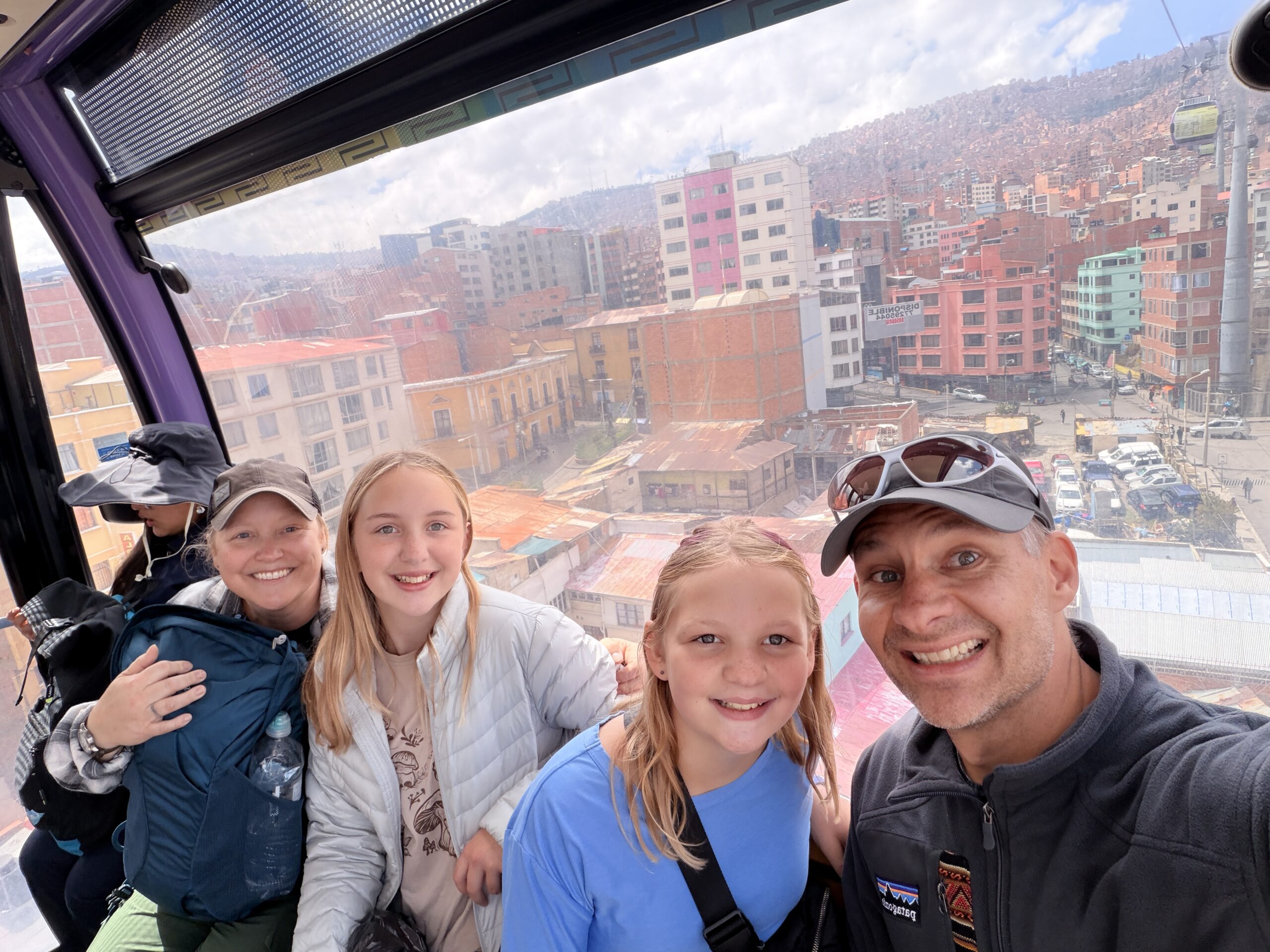
La Paz has been a beautiful stop. Everyone is so very friendly. We have explored only small parts of this city of about 2.2 million people – it is impossible to do more than a ‘toe dip’ during our week here. We spent an entire day riding the cable cars in a big loop around the city to get a feel for the size and scope of the space. We shopped in beautiful outdoor fruit and vegetable stalls, accidentally ordered a lunch special at a local deli (it was amazing, just not sure what it was), and freaked out when we found peanut butter in a local grocery store. But the highlight of La Paz was Fred’s climb….I’ll let him tell you about it.

Leave a Reply