
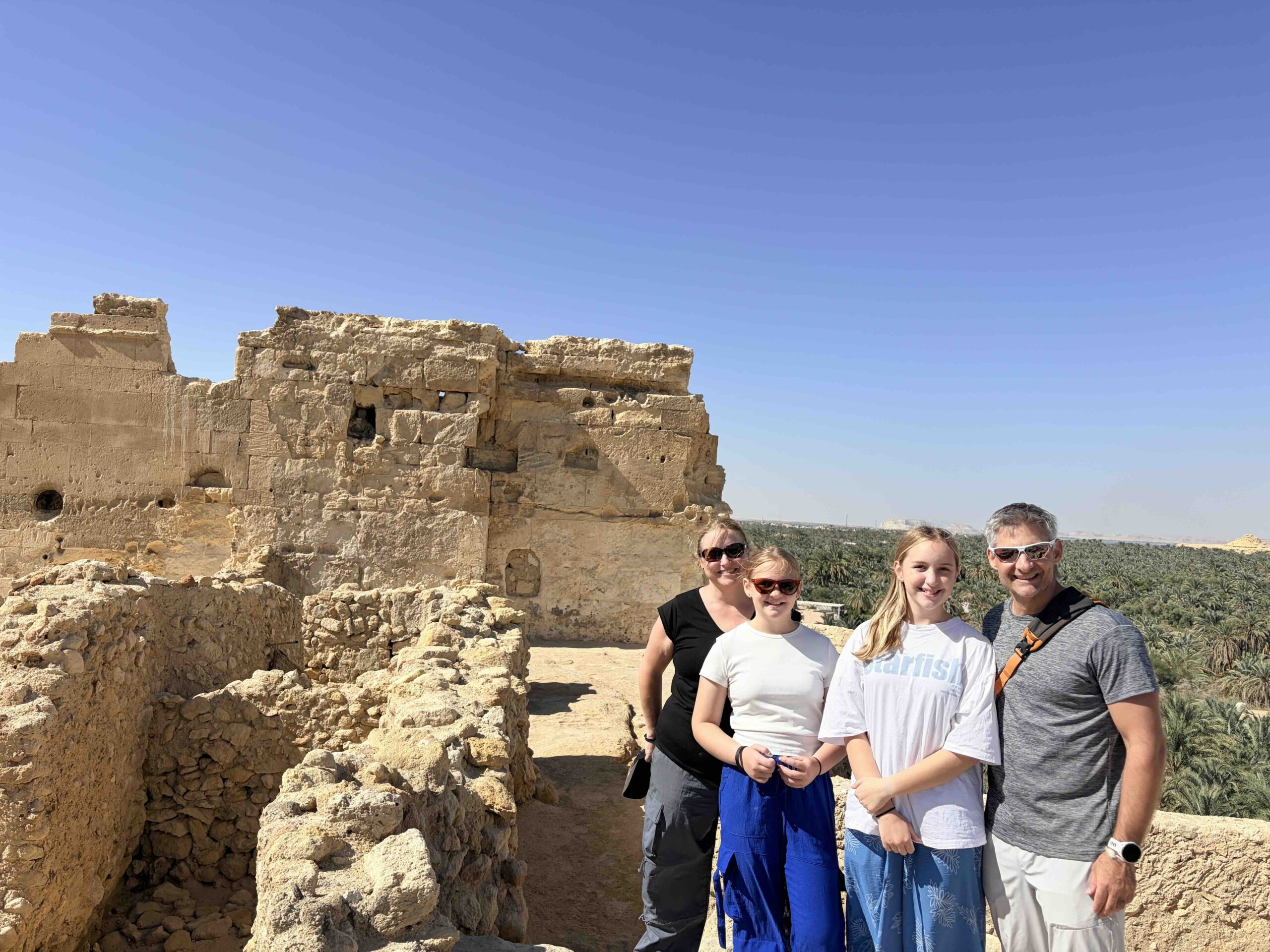
We have been so lucky to have a few visits with Khalid, a local Siwian who has a passion for the history of this wonderful region. With him, we toured the Shali Fortress and explored the heart of the city (see our blog post about Siwa). Another day, we toured Siwa House, which is a museum built in the old style of home and stocked with artifacts to show the way Siwans lived in the past. We learned about the importance of embroidery on clothing, wedding traditions, and purposes of different rooms in the early homes. In the cooler months, there was room in the home that housed the elderly – it was the room that got the longest sun, and therefore stayed the warmest. During those days, it was also used as the school, as the elderly taught the young ones.


Quick answer to one of the questions from the girls – where did they go to the bathroom? They actually had two compost style toilets, just off the kitchen area. After using them, they would add a bit of ash from the stove fires. They would switch toilets every month, to allow each one time to compost.
Khalid also took some time to chat with us about Muslims and the Islamic Faith. He has such a beautiful way of describing his faith. Essentially, Islam is based on 5 tenets – Praise to Allah, keep you body pure, take care of your people, fast from sun-up to sun-down during Ramadon, and take one pilgrimage to Mecca during your life. We have been hearing the calls to prayer multiple times a day – it seems like there are almost as many mosques in Siwa as there are Siwians. The way Khald explained the 5 prayer times was they are an invitation to rest; to pause, be still, cleans oneself, be grateful, and then continue with your day. That really resonated with us.

Khalid also accompanied us to the oracle temple; historically famous for the accuracy of its predictions, The most famous story he shared was about Alexander The Great. When he tried to conquer North and South Egypt, ancient Egyptians struggled to accept him because he was not a pharaoh, and a pharaoh was a god, so he decided to journey to Siwa. Not only did this prove his strength (he chose to travel without a guide), but he also declared the Oracle to name him a god. Problem solved.


As an aside, Khalid shared lemon grass, basil, dates, and the heart of a palm tree from his garden. The lemongrass was so lovely – we all started enjoying multiple cups off lemongrass tea each day. We loved it so much we have some in our pack as we head to the Philippines! The basil we tried to use with lemon – a common drink here is Lemon and Basil. The lemons here are small with very thinned rhines. If you pop a few into a blender with some water (and a bit of sugar), they make a lovely drink! Add a bit of basil as well, and it is amazing! The heart of palm was my favorite. When a palm tree is cut down, you can cut out the heart, at the base of the tree. It is considered a delicacy, and something you would share at an important event, such as a wedding, or with someone important. To sacrifice a palm tree is a big deal and an honor for the recipient of its heart!
4 responses to “Siwa History Part 2: Siwa House Museum, Islam and the Oracle Temple”
-
I didn’t know that hearts of palm were a delicacy…I love to get the canned ones. So yummy!
-
Apparently it is a great honor to have one shared with you!
-
-
Thank you. I love the learning! Shelley Joan
-
So glad you are enjoying the blog Shelley!
-


Leave a Reply